I recently watched a YouTube video about one of the most publicly dissected and endlessly relitigated moments in modern pop culture: the night Will Smith walked onto the Academy Awards stage and slapped Chris Rock.
For weeks, people debated what happened.
Whether it was staged.
Whether Chris crossed the line.
Whether Will’s response was justified.
What Chris should have done in the moment.
What Will should have done afterward.
Millions of people had an opinion.
I did too.
But the video pointed to something I hadn’t considered.
What caught my attention wasn’t the assault.
It was what happened afterward.
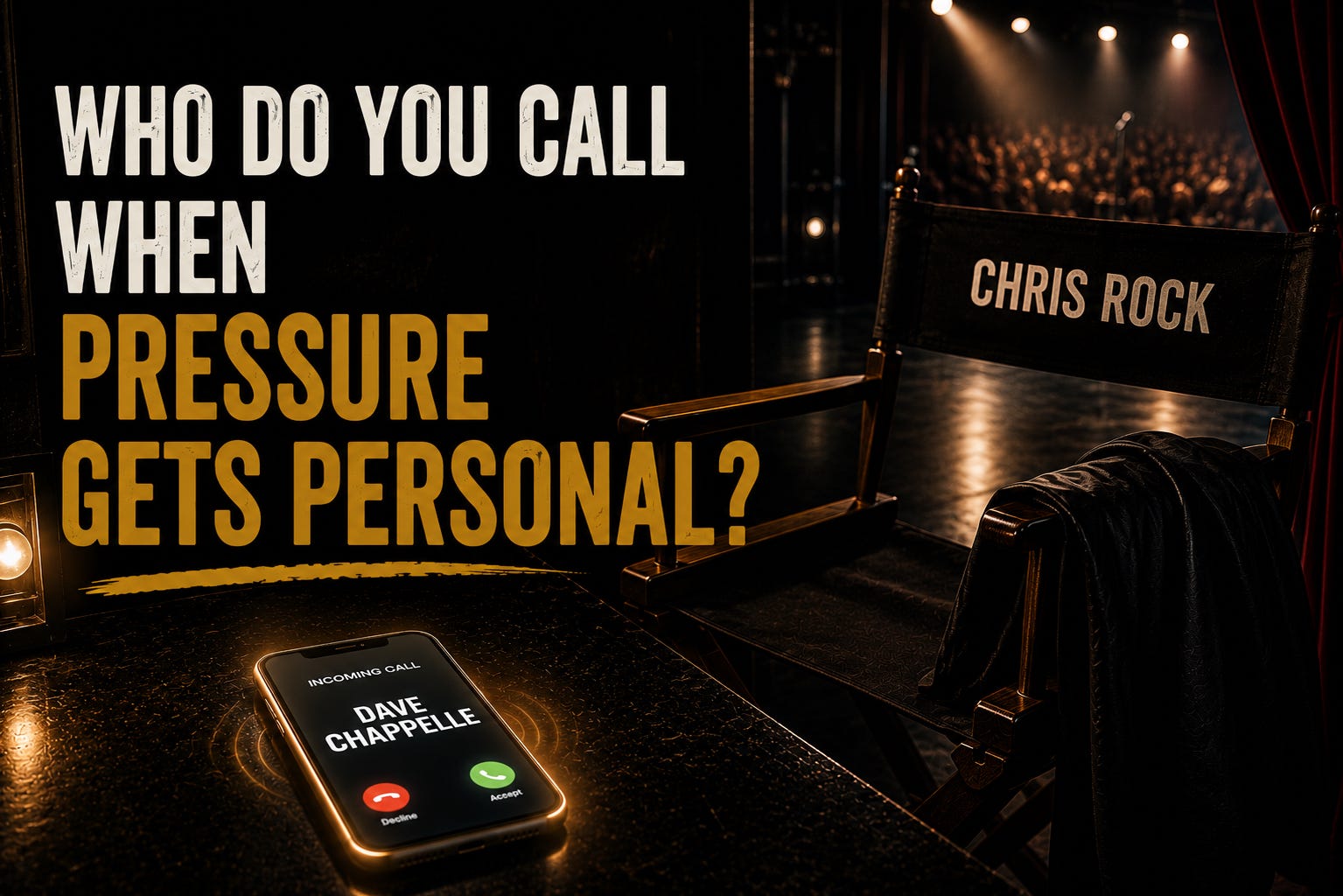
The video claims that Chris received calls from Oprah Winfrey and Barack Obama.
But the only call he answered was a FaceTime call from Dave Chappelle.
That detail stopped me.
Oprah Winfrey has built a brand around wisdom and sage advice. Barack Obama understands public pressure at levels few of us can imagine.
But in that moment, Chris needed something different.
He needed someone who understood the craft.
Someone who knew the pressure of performing at the top of that craft, then having it challenged in front of millions of people.
Chris didn’t need to explain that part. Dave already knew.
There is a lesson here for every executive navigating pressure.
You can have an impressive network and still feel dangerously alone.
I’ve coached enough senior executives to know that the higher you rise, the more people you have access to and the fewer people you may have given permission to tell you the truth.
I’ve also sat in the seat many of my clients occupy.
I’ve led organizations responsible for multimillion-dollar decisions. I’ve made consequential calls with incomplete information, competing priorities, and people waiting on my decision.
That doesn’t mean I know precisely what my clients are experiencing.
I don’t.
But I understand the pressure.
And I know what pressure can do to your judgment.
Urgency starts masquerading as clarity.
Fear starts calling itself caution.
Ego starts sounding like conviction.
And because everyone is waiting for you to make the decision, isolation starts feeling like leadership.
That’s when things get dangerous.
The people around you may see it.
That doesn’t mean they’ll tell you.
Some depend on you for their livelihood.
Some need your approval.
Some have learned that challenging you isn’t worth the consequences.
And some may be just as invested in your version of reality as you are.
So, who tells you the truth?
In The Power Code, I write about the ABCs of Success. One of those relationships is the Accountability Partner.
Let’s be clear.
I don’t have Oprah Winfrey’s number.
I may never have a conversation with Barack Obama.
But I do have three Accountability Partners who have carved out their own space near the top of the thought leadership industry.
They understand the craft.
They understand the pressure.
And they know me well enough to recognize when pressure is attempting to compromise my judgment.
Those are the people I call when success attempts to seduce me into believing my own press clippings.
They’re also the people I call when disappointment tempts me to question what I know to be true about my work.
They can ask the question I haven’t considered.
Challenge the assumption I’m treating as fact.
Help me separate what I’m feeling from what the situation requires.
And remind me of something I already know but can’t see clearly in the moment.
That’s why I need them.
But here’s the part too many executives discover too late.
You don’t get to wait until your judgment is compromised to decide whose judgment you trust.
In that moment, it would have been too late for Dave Chappelle to build a relationship with Chris Rock.
Dave had to have already earned the right to be someone Chris would answer.
The trust had to exist.
The credibility had to exist.
And Chris had to have already decided that Dave’s voice mattered.
Before the pressure arrived.
When the moment comes, you may not need another advisor.
You may not need another expert.
You may not need the most powerful person in your network.
You may need the person who knows you, understands the pressure, and has earned the right to interrupt your thinking.
Do you have that person?
Because the higher you rise, the easier it becomes to confuse being surrounded with being supported.
To confuse agreement with accountability.
To confuse having people you can call with having someone whose call you will answer.
And when pressure compromises your judgment, that difference can cost you.
Three Questions to Live By:
1. Who currently has enough credibility with you to challenge your judgment when you’re under pressure, and have you explicitly given them permission to do it?
2. Who understands the work, the stakes, and the pressure of operating at your level well enough that you don’t have to spend the first hour explaining why the situation is difficult?
3. What are you doing now to build the trust, candor, and mutual accountability that will make their voice matter when the moment comes?
Don’t wait until you need the relationship to start building it.
By then, it may be too late.
Power is Built. Never Granted.
#ExecutiveAccountability #LeadershipIsolation #RadicalCandor #TrustedAdvisors