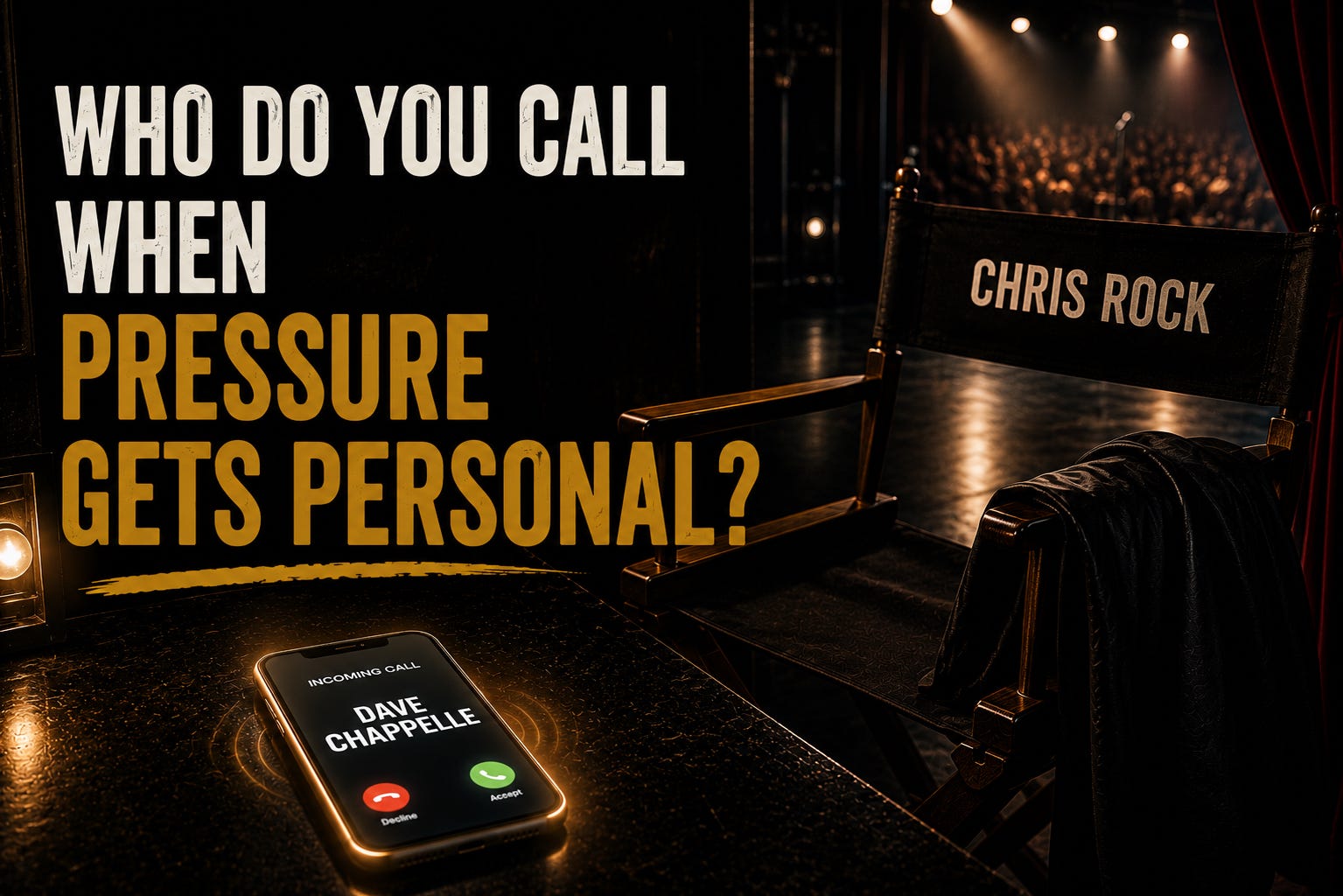
Every important decision you’ve ever made was made with people around your table who weren’t physically in the room.
Most of us assume every thought in our head belongs to us. It doesn’t. Over time, the voices we’ve heard throughout our lives become so familiar that we stop recognizing them as someone else’s. We simply call them our own.
The question isn’t whether people are around your table.
The question is whether you’ve intentionally invited them.
Years ago, while reading Think and Grow Rich, I was captivated by Napoleon Hill’s description of his “Invisible Cabinet.” Hill imagined consulting a group of historical figures before making important decisions—not because they could tell him what to do, but because he believed the people we choose to admire eventually shape the way we think.
The idea stayed with me until it led me to ask a different question: What would happen if I became intentional about the voices influencing my judgment?
Instead of allowing old conversations, fears, expectations, and assumptions to occupy permanent seats in my thinking, I began imagining a table surrounded by people whose character I trusted, whose lives I admired, and whose perspective consistently challenged me to see more clearly. Over time, that practice became something uniquely my own.
I no longer imagined an Invisible Cabinet.
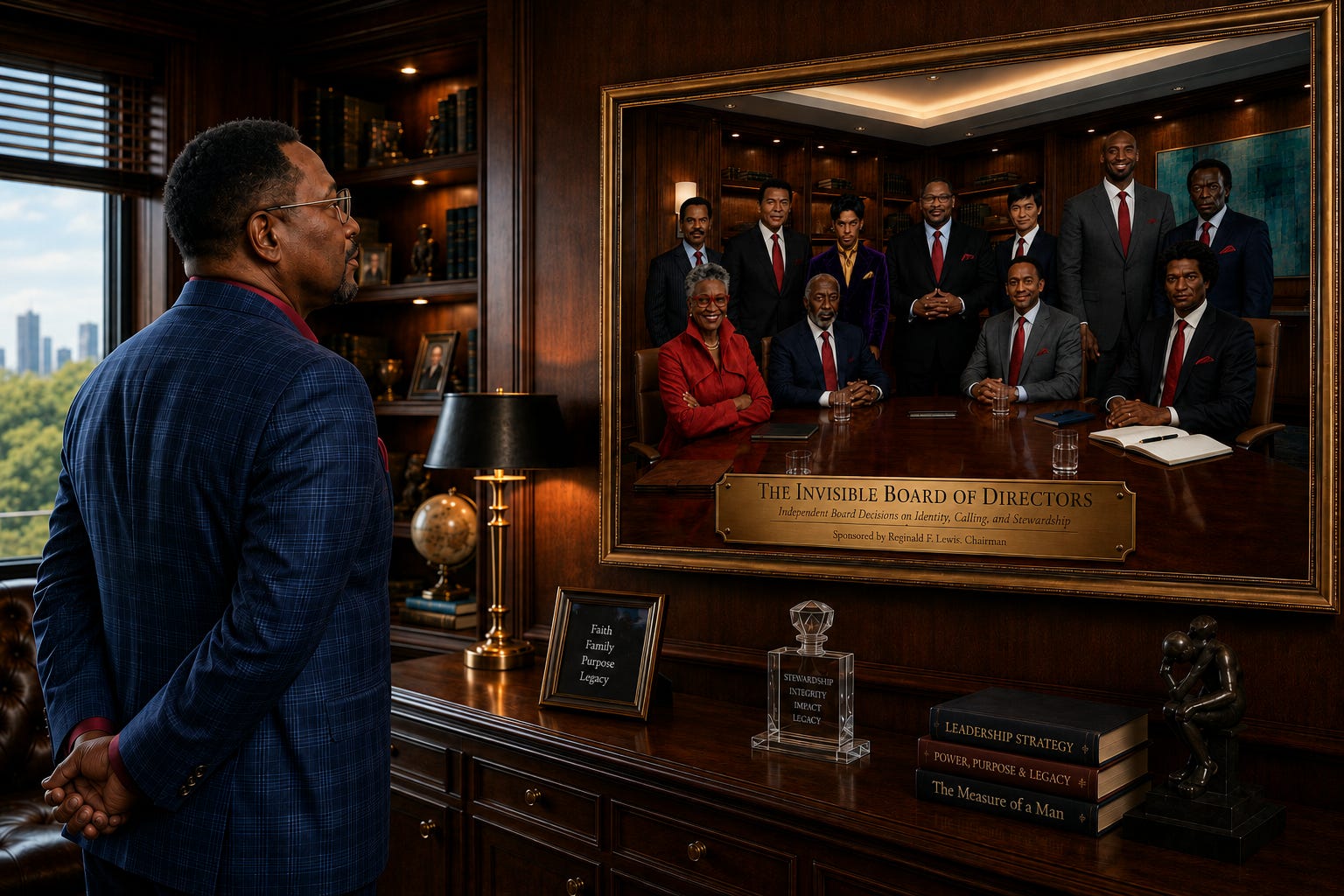
So I built an Invisible Board of Directors.
A board doesn’t exist to make decisions for the CEO. It exists to protect what matters most.
That’s exactly what I wanted.
Not people to tell me what to think.
People who would challenge how I think.
Not long ago, I faced a decision that looked obvious on paper.
A Fortune 100 company reached out about executive coaching. It was the kind of opportunity most coaches would welcome without hesitation.
Before accepting any coaching engagement, I begin with a conversation. Credentials matter. Chemistry matters more.
Near the end of our discussion, I asked the question that’s become one of the most reliable diagnostics of a leader’s readiness for coaching.
“What role do you think you’re playing in creating the very problems you’re trying to solve?”
He answered immediately.
But he answered a different question.
Rather than examining his own leadership, he returned to explaining why his team wasn’t responding the way they should.
I wasn’t listening for a specific answer.
I was listening for curiosity and ownership.
Neither showed up.
The meeting ended. I closed my laptop and sat quietly. My gut told me this wasn’t the right engagement. The compensation was attractive. The client was impressive. Everything about the opportunity said yes. Everything inside me said no.
So I called for an Invisible Board meeting.
As Chairman of the Board, Reginald F. Lewis took his seat. Miles Davis settled in without looking up. Bruce Lee never moved. Clarence Avant folded his hands. Kobe Bryant leaned forward with that familiar smirk. Prince smiled as though he’d already heard the ending. Muhammad Ali looked amused. Ann McNeill watched quietly. Dr. Peter James waited patiently. Somewhere in the room, I could almost feel my ancestor, Gabriel Bingham.
No one spoke at first.
Finally, Miles broke the silence.
“Did you hear what he didn’t say? And how loudly he wasn’t saying it?”
Bruce spoke next.
“Is this the best use of your energy?”
Clarence nodded.
“You spend a lifetime building a reputation. Protect it one decision at a time.”
Kobe never looked away.
“Is this really the kind of work your craft was built for?”
Ann smiled.
“How much money you’ll make is always an important question.”
She paused.
“It just shouldn’t be the deciding factor.”
Reginald Lewis slowly looked around the table.
“Champ?”
Muhammad Ali smiled but said nothing.
“Prince?”
Prince leaned back with the faintest grin.
Still nothing.
Lewis turned toward Gabriel.
My ancestor simply held my gaze.
Lewis nodded once.
“The Board has reached its decision.”
Then he looked directly at me.
“Are you building the coaching practice you believe in, or are you allowing someone else’s prestige to define your standards?”
The room settled back into silence.
Almost as if he’d been waiting for everyone else to finish, Dr. Peter James finally spoke.
“So Galen... what are you going to do?”
The meeting was over.
The next morning, I declined the engagement. Instead, I introduced him to another coach who I believed was a better fit for where he was in his leadership journey.
Over the years, I’ve learned something that’s made me a better coach.
I’m not for everyone.
My role isn’t simply to help leaders solve problems. It’s to challenge them to see themselves, their leadership, and their choices differently. That kind of work requires curiosity, ownership, and a willingness to become uncomfortable. Not everyone is ready for that, and recognizing who is—and who isn’t—is just as important as the coaching itself.
That’s one of the reasons I keep my Invisible Board close.
They don’t create my standards.
They guard them.
When pressure, prestige, or possibility tempt me to compromise, they call me back to the leader I’ve already decided to become. In that moment, I didn’t simply decline a client.
I walked toward the standards I’d already chosen.
I’ve come to believe that the people around your table shape your judgment long before they shape your decisions. Some deserve to be there. Others have occupied those seats for years without an invitation.
Before your next pivotal decision, take a moment to look around your table. Who’s speaking? Who’s been silent? Who still has a voice because you’ve never asked them to leave? And who deserves an invitation you’ve never extended?
Someone will always be around your table.
The only question is whether they’re there on purpose.
The meeting is adjourned.
Power is Built. Never Granted.
#InvisibleBoardOfDirectors #Leadership #ExecutiveCoaching #WhoIsAtYourTable #PowerIsBuilt